
Almost everything this series has covered is a person. This one is not. It is two bodies of knowledge, held by thousands of anonymous hands over several centuries, and between them they answer a question every woodworker eventually asks: how do you hold two pieces of wood together without anything that is not wood?
One. Two crafts, two scales.
Kigumi is the joinery of buildings. Posts, beams, brackets, the interlocking timber frames that hold up temples and houses. This is Nishioka's world from the previous episode, and it is what keeps Horyu-ji standing.
Sashimono is the joinery of furniture and boxes. Cabinets, chests, tansu, writing boxes, the fine work of the cities. The word comes from the practice of fitting parts together, and the tradition is associated particularly with Kyoto and with Edo, which developed distinct styles: the Kyoto work refined and courtly, the Edo work plainer and made for merchants and craftsmen.
Both refuse nails and screws. That is not superstition. Wood moves with the seasons, across the grain far more than along it, and a metal fastener does not move with it. Given enough winters the wood wins, splits itself, and the joint is gone. A wooden joint made with an allowance for that movement simply carries on.
Two. The good joint is the one you cannot see.
The part that startles Western woodworkers is that in the best sashimono, the joinery is hidden.
A dovetail in the English or American tradition is usually displayed. Exposed pins on a drawer front are a signature, a way of saying this was cut by hand. Whole marketing arguments are built on visible joinery.
Much traditional sashimono goes the other way. The joint is cut so that from the outside the box appears to be a single piece of wood with no visible means of assembly. The skill is total and the evidence of it is deliberately concealed.
Sit with that for a moment if you make things for sale. An entire mature tradition decided that the proof of skill should be invisible, and that the object should present as calm and whole rather than as a demonstration.
Tage Frid at episode nine and Garry Knox Bennett at episode four were both circling this: that showing off your joinery is a different activity from making a good object. Sashimono settled the question several hundred years earlier.
Three. Shoji, and light as a material.
Sitting alongside both is the shoji: a light timber lattice covered in paper, used as a sliding door and a wall.
It is worth mentioning here because it shows what the joinery is for. A shoji frame is a grid of small members meeting in half-lap joints, thin enough to be carried by one hand, rigid enough to slide in a track for decades. Nothing about it could be made with fasteners, because there is no meat to fasten into.
What it produces is not a wall but a light level. Paper turns direct sun into an even glow, and a room with shoji has no bright side. That is a material decision with an emotional result, and it comes out of a joinery tradition that made very light frames possible.
What to carry forward
Design for movement or it will design for you. This is the single most common failure in beginner furniture. Wood moves across the grain with humidity, and every joint either allows for that or eventually fails.
Try hiding one joint completely. Not because visible joinery is wrong, but because doing it once teaches you how much of your technique was aimed at being seen.
The frame is what makes the light. Thin members, well jointed, let you do things heavy construction cannot. Lightness is a structural achievement, not an absence.
Anonymous work counts. Nobody knows who made most of the finest sashimono in existence. It is still the finest sashimono in existence.
A note on sources
This episode summarises a broad tradition rather than a documented individual, so treat it as an introduction and not an authority. The distinction between kigumi as architectural joinery and sashimono as furniture and box work, the Kyoto and Edo styles, and the avoidance of metal fasteners are all standard in the literature on Japanese woodworking. For a serious treatment, The Building of Horyu-ji and the Japan Woodcraft Association's material on the disciplines are the places to go. Where our summary and those sources disagree, believe them.
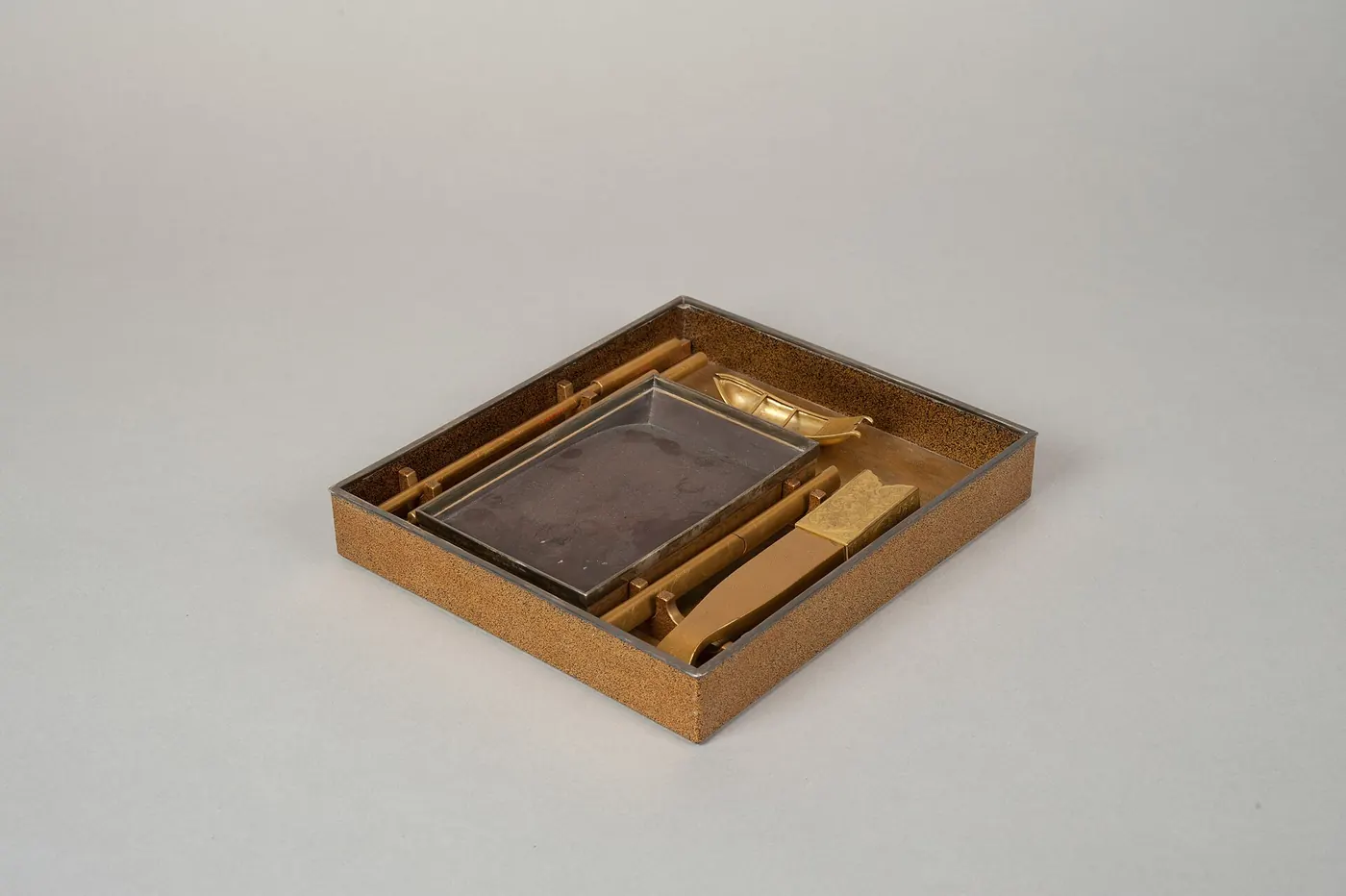
The writing box above is in the Metropolitan Museum of Art, made by Nakayama Komin.