
Every maker who has ever been asked "why does it cost that much?" has fumbled for an answer. Usually it comes out as hours, or as love, and neither is convincing to somebody holding a catalogue with a cheaper version in it.
In 1968 an Englishman called David Pye wrote down the answer, and it has not been improved on since.
He split all making into two kinds. Not handmade and machine-made, which is the distinction everybody reaches for and which falls apart the moment you look at it. Something better.
One. Risk and certainty.
Pye called them the workmanship of risk and the workmanship of certainty.
The workmanship of risk is, in his words, "workmanship using any kind of technique or apparatus, in which the quality of the result is not predetermined, but depends on the judgment, dexterity and care which the maker exercises as he works."
The workmanship of certainty is the opposite. The quality of the result is settled before anything is made. The jig, the mould, the program, the production line. Once it is set up, the outcome is fixed, and the ten-thousandth one is identical to the first.
Read the definition of risk again and notice what is not in it. There is no mention of hand tools. "Any kind of technique or apparatus." What makes it risk is that the result is still in doubt while you are working, and that the doubt is resolved by your judgment.
This matters enormously in practice. A router running in a jig is the workmanship of certainty, even though it is loud and you are holding it. A router used freehand to shape a curve you are judging by eye is the workmanship of risk. The bandsaw cut you make to a pencil line is risk. The same cut against a fence is not.
So the question is never "did a machine touch it." The question is whether, at the moment of making, the thing could still have gone wrong.
Pye himself was no purist about it. To make his fluted bowls and boxes he invented an apparatus he called a fluting engine, around 1949. He built a machine. The flutes were still carved rather than turned, and the outcome still depended on him, so it was still workmanship of risk. He had thought about this more carefully than the people who quote him.
Two. What he was not saying.
Two misreadings have attached themselves to Pye, and both are worth clearing out because they will damage you if you believe them.
The first is that certainty is bad. It is not. Pye was not a romantic and he was not against industry. The workmanship of certainty gives us screws that fit, glass that is flat, and books that are legible, and a world made entirely by risk would be a poorer and far more expensive place. He was describing a distinction, not preaching one.
The second is more dangerous: that "workmanship of risk" is a licence for rough work. It is not. Risk is about the outcome being undetermined, not about the outcome being sloppy. A wobbly joint is not evidence of humanity. It is evidence of a wobbly joint. Pye was interested in risk that pays off, which is to say work in which judgment and skill were genuinely applied and genuinely succeeded.
The phrase has become, in his own lifetime and since, something of a slogan for people selling handwork. Being accurate about it is more useful than being loud about it.
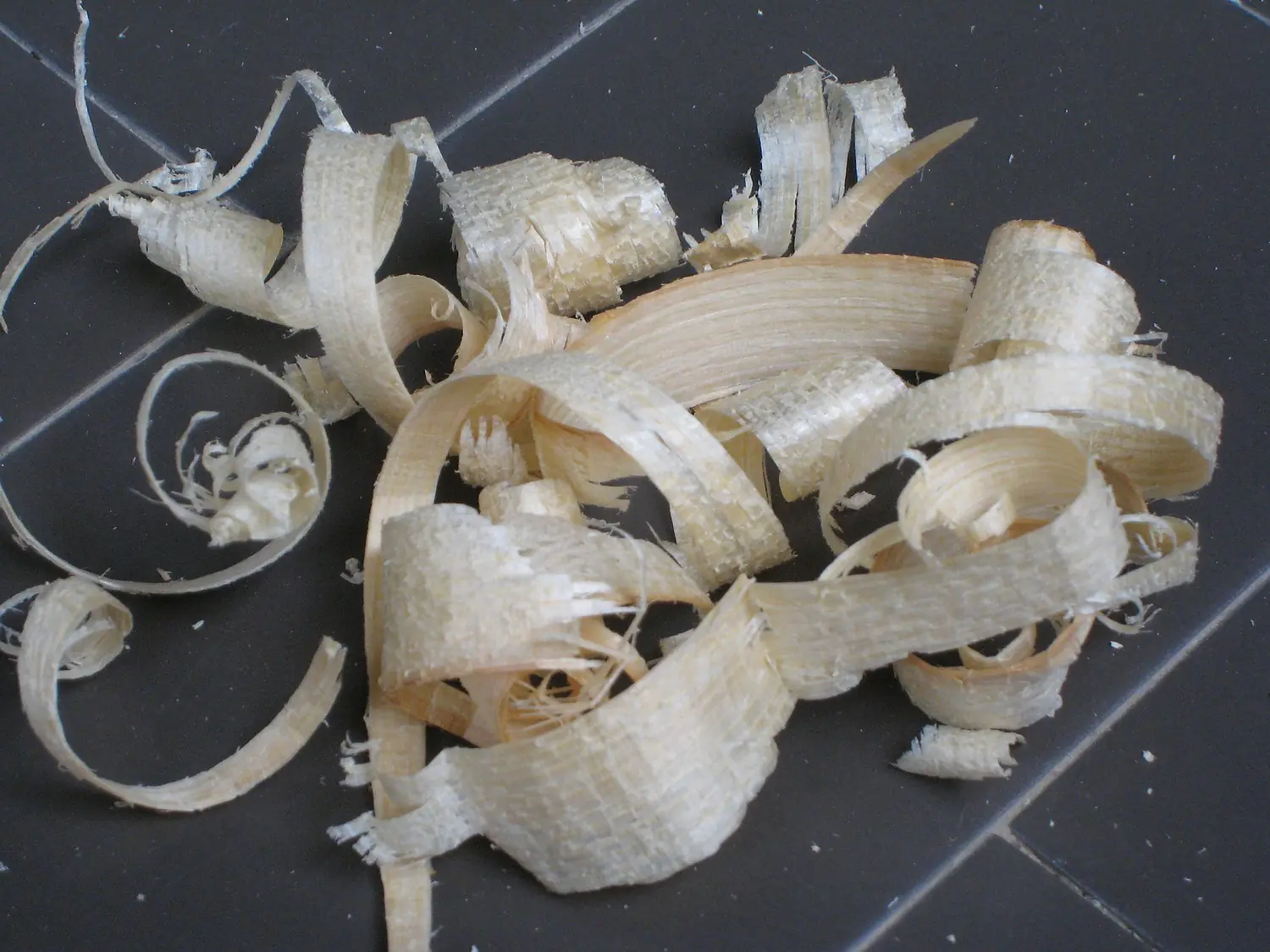
A pile of plane shavings is worth looking at in that light. Every one of them is the residue of a cut that could have gone wrong and did not.
Three. What this actually buys you.
Here is the part that goes in your pricing.
When the outcome is at risk, the maker is making decisions continuously. Thousands of them, most too small to name: a shade more pressure here, follow this grain rather than fight it, take the curve a fraction further because the eye says so. None of those decisions can be specified in advance, which is precisely why they cannot be reproduced.
That accumulation is what people mean when they say a piece has life in it. It is not mysticism. It is the visible record of continuous judgment, and it cannot be manufactured, because manufacturing is the removal of exactly that.
Which gives you a sentence to use when someone compares your dresser to the one for three hundred dollars.
The cheaper piece was decided before it was made. Every one is identical because the process guarantees it. Nobody was making judgments while it happened, and nothing about it could have gone wrong, which is also why nothing about it could have gone particularly right.
This one was not decided in advance. It was decided while it was being made, by a person who could have got it wrong, and did not.
That is not a story about hours. It is a description of two different kinds of object.
Who he was
David William Pye, born 18 November 1914, died 1 January 1993. Professor of Furniture Design at the Royal College of Art from 1964 to 1974. He wrote The Nature of Design in 1964 and The Nature and Art of Workmanship in 1968, and he made carved fluted bowls and boxes with that engine of his. He was appointed OBE, and in 1991 he received the Sir Misha Black award.
He is the only person in this series so far who is remembered mainly for what he wrote rather than what he made. Both books are still in print, which for a design theory book from the sixties is its own kind of verdict.
What to carry forward
Stop saying handmade. It means almost nothing and invites an argument about whether you used a sander. Say the outcome was not predetermined.
Audit your own process honestly. Which parts of what you make are genuinely at risk, and which are jigged, templated and certain? There is no shame in the certain parts. But know which is which, because only one of them is what you are charging for.
Do not use risk as an excuse. A defect is a defect. The value is in judgment that succeeded, not in judgment that was merely attempted.
Read the book. It is short, it is not sentimental, and it is the most useful hundred and fifty pages a maker can read about why the work is worth what it is worth.
A note on sources
Dates, the Royal College of Art years and the awards follow his Wikipedia entry and the Royal Commission of 1851's record of the 1991 Sir Misha Black medal. The definition of the workmanship of risk is quoted directly from The Nature and Art of Workmanship, 1968. The fluting engine is dated to around 1949 by several accounts of his making practice. Where our summary of his argument and his own text differ, believe his text.