
Borge Mogensen took Kaare Klint's method and pointed it somewhere Klint had not: at people with very little money.
He was born in 1914, the same year as Hans Wegner, who was a friend. He trained as a cabinetmaker, then studied under Klint at the Royal Danish Academy. In 1942, at twenty-eight, he became head of design for the furniture arm of the Danish Co-operative Wholesale Society.
That last sentence is the whole episode. Not a gallery. Not a luxury manufacturer. The co-op.
One. Design for the people who shop at the co-op.
The co-operative existed to supply ordinary Danish households at prices they could manage. Putting a serious designer in charge of its furniture was a deliberate act, and Mogensen spent years producing pieces that were simple, robust, and cheap enough to be bought by people who had never bought designed furniture before.
Hold that against how this series usually goes. Nakashima's tables are museum pieces. Maloof kept his workshop small and his waiting list years long. Bennett's cabinet is a landmark precisely because it was expensive to make and then defaced. Almost every maker here has, one way or another, made rare things for people with money.
Mogensen took the same training, the same method and comparable ability, and aimed it at volume and affordability. That is a different definition of success and this series should say so rather than treat it as a lesser one.
Two. Klint's method, harder constraints.
Everything Klint taught applies more sharply when the budget is small.
Measuring what already works matters more, because you cannot afford to prototype your way out of a bad guess. Designing storage from the inside out matters more, because a small home has no volume to waste. Proportion inherited from furniture that survived centuries matters more, because you get one chance to be right.
His work is plain in a way that is easy to underrate. Simple frames, honest joints, hard-wearing materials, no gesture that costs money without earning it. He also looked at Shaker furniture, which had arrived at similar conclusions from a religious position a century earlier, and drew on it openly.
Making something plain that is also good is substantially harder than making something elaborate that is good, because there is nowhere to hide. An ornate piece can carry a weak proportion, since the eye is busy. A plain chair is proportion and nothing else.
Three. Why this one matters to a small workshop.
He died in 1972, aged fifty-eight. His furniture is still made and it is still comparatively affordable, which after fifty years is its own argument.
The useful question he leaves is one every maker eventually faces. Do you make a few expensive things well, or many affordable things well?
Both are honourable and they are genuinely different crafts. The first is what most of this series has documented and it is what a one-person workshop can realistically do. The second requires design for manufacture, a partner who can produce at volume, and a willingness to give up control of the making.
What is not honourable is the third option, which is making cheap things badly and calling it accessibility. Mogensen's whole career is evidence that the constraint of affordability, taken seriously, produces better design rather than worse, because it removes every option except getting the fundamentals right.
What to carry forward
Constraints improve design. A brief with no budget limit is harder to answer well, not easier.
Plain is the difficult one. If you want to test your proportion, remove the ornament and see whether anything is left.
Decide which craft you are in. Few and expensive, or many and affordable. Both work. Drifting between them does not.
Cheap and good is a design problem, not a corner-cutting problem. It is solved before you cut anything, in the choice of form, joint and material.
A note on sources
His birth in 1914, his cabinetmaking training and study under Kaare Klint, and his appointment in 1942 to lead design for the furniture arm of the Danish Co-operative Wholesale Society are standard in the literature on Danish modern furniture, as are his death in 1972 and the Shaker influence on his work. For specific model numbers and dates, go to the manufacturers who still produce his designs.
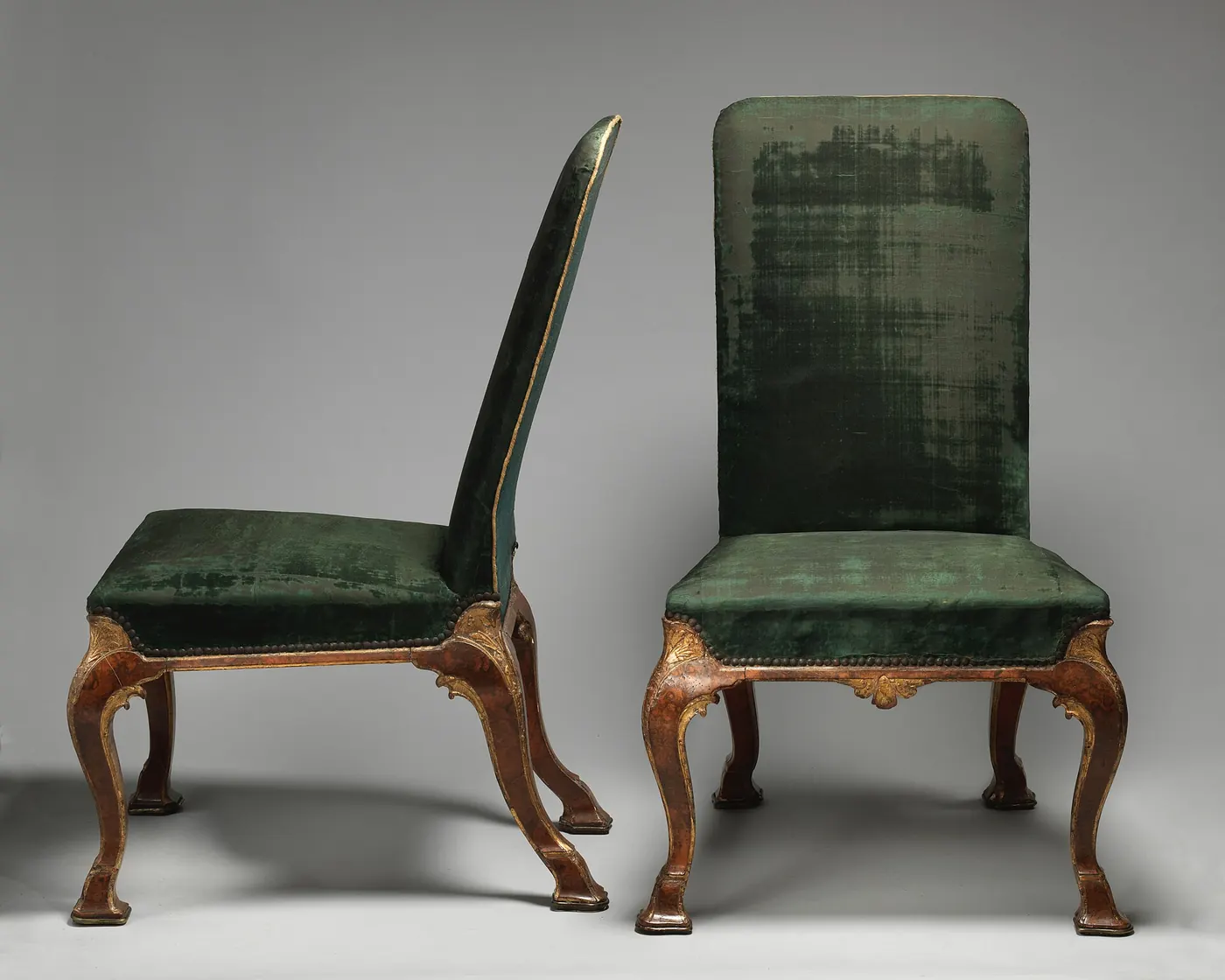
His estate is live, so none of his work is reproduced. The chair above is an anonymous British side chair in the Metropolitan Museum of Art, chosen because it is plain and nobody remembers who made it.
That brings this series to twenty makers. It began with a seventeenth-century carver and has arrived at a man who wanted everybody to own a decent chair.